Participating artists: Yaron Atar, Einat Best, Dean Bar, Ido Bar-El, Yotam Goren, Matti Harel, Gala Weizman, Doron Yahalom, Anna Yam, Sharon Ya’ari, Harel Luz, Eran Naveh, Techelet Ram
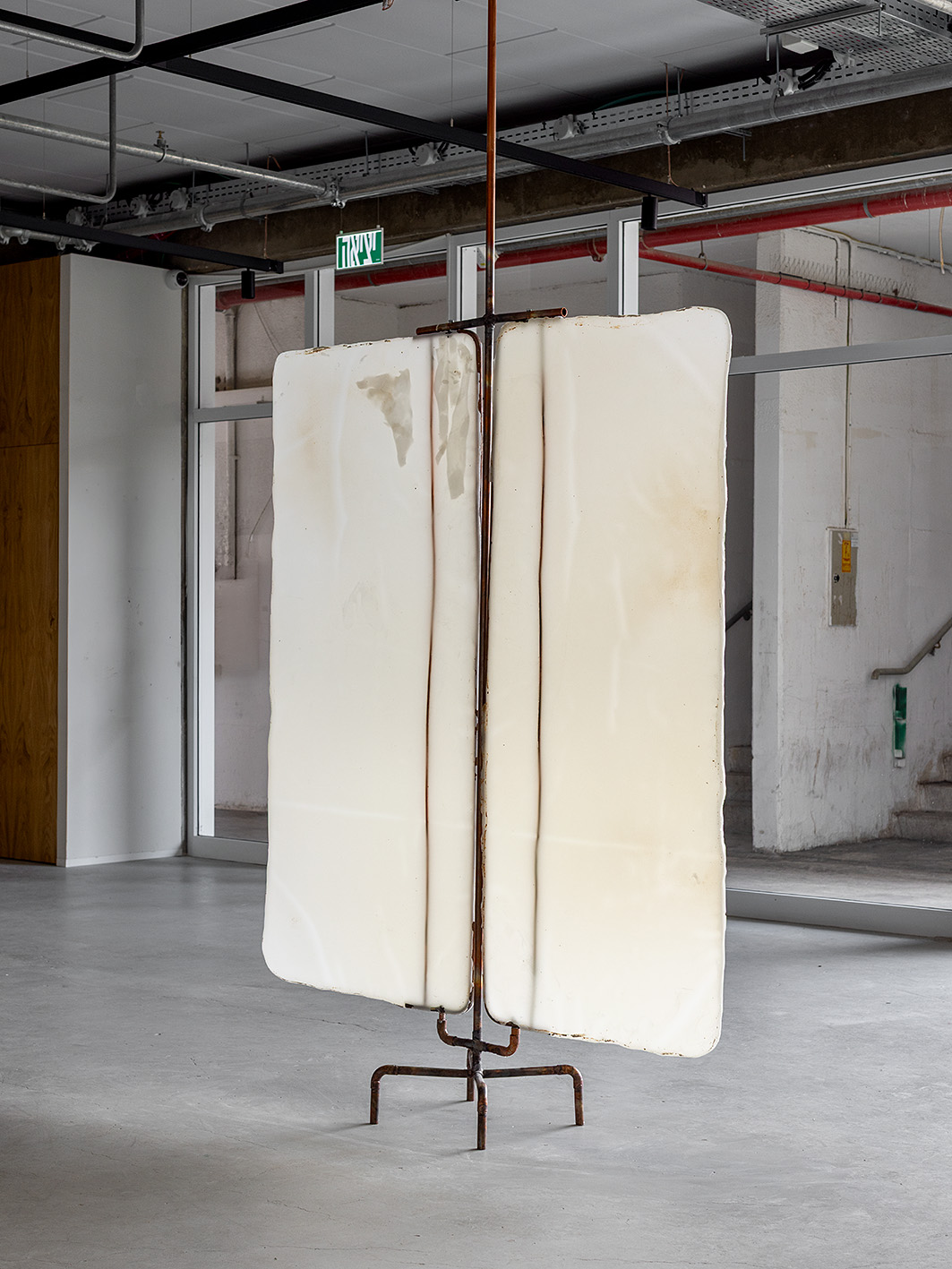
In the exhibition Ramat Gan, a figure wanders through a sparse, impoverished environment. The objects at their disposal serve only practical purposes. They seem to have taken shape in response to the conditions of the place, drawing their colours from it. Emerging from the landscape, they come together to form a new setting: fragments once torn away, now given a second chance. This is a region of dusty gusts, grainy sand and weather that calls for light clothing and a hat. The objects blend into the background, becoming part of the desert terrain.
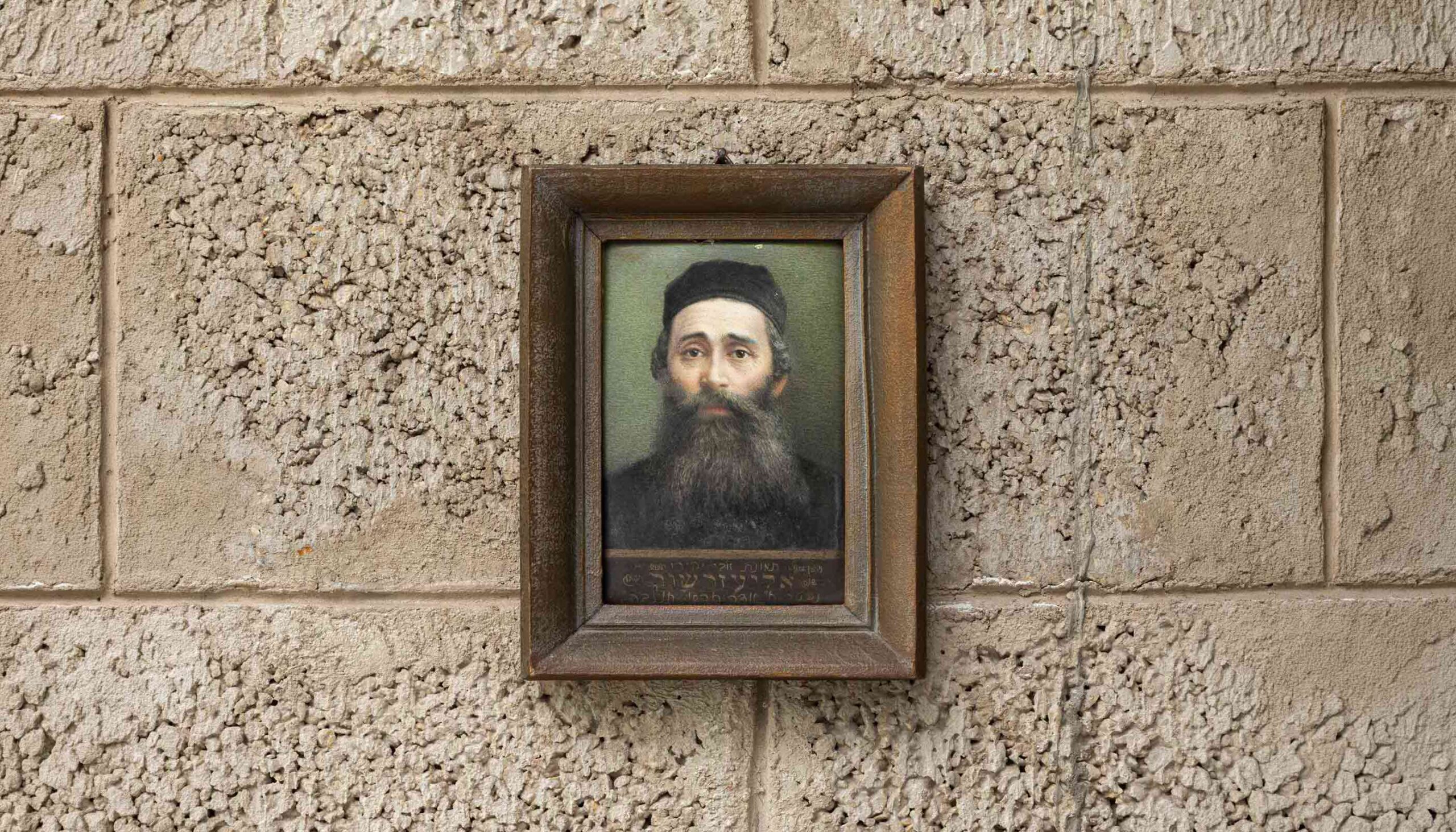
The figure belongs to the landscape. Bound to its geography, they live under the rule of a harsh climate. Dust is everywhere; by the end of the day, it has settled evenly across every feature of the face. As the landscape slips inward, it fills the contours of the body. Consciousness empties and fills again like a glass. The figure is a mirror, a reflection that can only be perceived through an encounter with the outside world. The landscape settles on the surface of consciousness and itself becomes conscious. Broken, fragmented images are projected onto salty liquids, droplets that frame divided compositions: car/sandal, vase/palm tree, hat/roof tiles. When the tears fall, they are absorbed back into the objects they depict, out of longing.
The city of Ramat Gan, too, is an assemblage. Its identity passed through many forms before taking shape: from settlements to a colony, and from a colony to a city. So much has been said about New York, Paris, London and Jerusalem. Less has been said about Ramat Gan. It is a place that might seem a little dull, challenging the way we look at it and asking the imagination to give it something more.
The works in the exhibition come together to fill the name Ramat Gan with new meaning. They form the landscape that flows into the name’s identity, a landscape made up of compositions drawn from our lives. The works exist in the movement between local material reality and the ways the artists interpret and give it form. They play with what is at hand, rearranging the order of things: bringing strangers together and drawing close things apart. They gather dust, even as dust shapes them.